
No products in the cart.
Patient Guidance
Pregabalin Dosage Guide
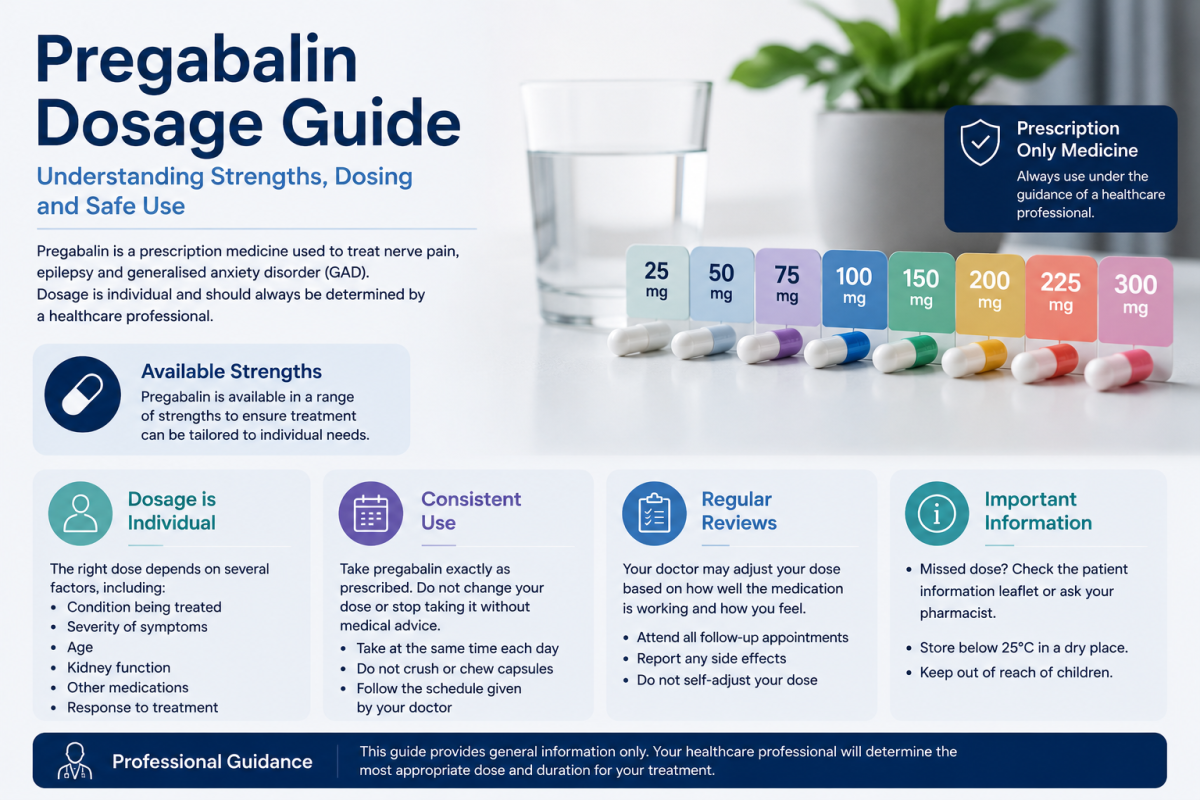
Pregabalin is a prescription medicine commonly prescribed for neuropathic pain, epilepsy, and generalised anxiety disorder (GAD). One of the most common questions patients have before starting treatment is how pregabalin dosages work and why different strengths are available.
This pregabalin dosage guide explains the available strengths, factors that influence prescribing decisions, and important information patients should know about treatment. Because dosage requirements vary between individuals, all prescribing decisions should be made by a qualified healthcare professional.
If you are looking for available strengths and pharmacy services, visit our Buy Pregabalin Online UK page.
What Is Pregabalin?
Pregabalin is a prescription-only medication that affects nerve signalling within the brain and nervous system.
Healthcare professionals may prescribe pregabalin for:
Neuropathic pain
Generalised anxiety disorder (GAD)
Epilepsy as an additional treatment
Treatment plans are tailored to individual patient needs, which is why pregabalin is available in multiple strengths.
For more information, see What Is Pregabalin Used For?
Why Are Different Pregabalin Strengths Available?
Every patient is different.
Factors such as medical condition, symptom severity, age, kidney function, and treatment response can influence prescribing decisions.
Having multiple strengths available allows healthcare professionals to:
Individualise treatment
Adjust therapy when necessary
Monitor patient response
Support ongoing treatment management
The appropriate dosage can only be determined through professional medical assessment.
Available Pregabalin Strengths
Pregabalin is available in a range of strengths, including:
25mg
50mg
75mg
100mg
150mg
200mg
225mg
300mg
Not all strengths may be suitable for every patient.
For information on available products, visit our Pregabalin Product Page.
What Factors Affect Pregabalin Dosage?
Healthcare professionals consider several factors when determining the most appropriate dosage.
Condition Being Treated
Dosage requirements may differ depending on whether pregabalin is prescribed for nerve pain, epilepsy, or anxiety.
Symptom Severity
The severity of symptoms can influence treatment planning and ongoing monitoring.
Individual Response
Patients respond differently to medications, which is why treatment may require review and adjustment over time.
Kidney Function
Because pregabalin is processed through the body in a specific way, kidney function may be an important consideration during prescribing.
Other Medications
Healthcare professionals may review any other medications being taken before making prescribing decisions.
Understanding Pregabalin 75mg
Pregabalin 75mg is one of the most commonly discussed strengths.
Healthcare professionals may prescribe this strength when:
Beginning treatment
Adjusting a treatment plan
Managing ongoing therapy where clinically appropriate
The suitability of any strength depends on the individual patient and their medical circumstances.
Learn more in Pregabalin 75mg vs 300mg: Understanding the Differences.
Understanding Pregabalin 300mg
Pregabalin 300mg contains a higher amount of active ingredient than lower-strength capsules.
Healthcare professionals may prescribe this strength when they determine it is clinically appropriate based on the patient’s treatment needs and response to therapy.
Patients should always follow the dosage instructions provided by their prescriber.
Can Your Pregabalin Dosage Change?
Yes.
Healthcare professionals may periodically review treatment and make adjustments where necessary.
Reasons for dosage review may include:
Symptom improvement
Changes in medical condition
Side effects
Treatment response
Ongoing clinical assessment
Patients should never change their dosage without consulting their healthcare professional.
How Should Pregabalin Be Taken?
Pregabalin should always be taken exactly as prescribed.
General recommendations include:
Following the prescribed schedule
Taking medication consistently
Reading the patient information leaflet
Attending scheduled treatment reviews
If you are unsure how to take your medication, seek advice from a healthcare professional.
What Happens If You Miss a Dose?
Patients should follow the guidance provided by their healthcare professional or the patient information leaflet supplied with their medication.
If you are unsure what to do after missing a dose, contact your pharmacist or healthcare provider for advice.
Patients should not alter their treatment plan without professional guidance.
Are Higher Dosages Better?
Not necessarily.
The goal of treatment is to identify the dosage that is most appropriate for the individual patient while supporting treatment objectives and overall wellbeing.
A higher strength does not automatically mean better results.
Healthcare professionals consider numerous factors before making dosage decisions.
How Often Should Pregabalin Treatment Be Reviewed?
Regular reviews help ensure that treatment remains appropriate and effective.
Healthcare professionals may assess:
Symptom control
Treatment effectiveness
Side effects
Ongoing suitability
For patients taking pregabalin over extended periods, periodic reviews may form part of their treatment plan.
Read Can You Take Pregabalin Long Term? for more information.
Can Pregabalin Cause Side Effects at Different Dosages?
Side effects vary between individuals.
Some commonly reported side effects include:
Dizziness
Drowsiness
Headache
Dry mouth
Blurred vision
Patients who experience concerning symptoms should speak with their healthcare professional.
For further information, read Pregabalin Side Effects: What Patients Should Know.
Frequently Asked Questions
What strengths does pregabalin come in?
Pregabalin is available in strengths ranging from 25mg to 300mg.
What is the most common pregabalin dosage?
Dosage requirements vary depending on the patient and the condition being treated.
Can I increase my pregabalin dosage myself?
No. Patients should only make dosage changes under the guidance of a qualified healthcare professional.
Is pregabalin 300mg stronger than 75mg?
Yes. Pregabalin 300mg contains a greater amount of active ingredient than pregabalin 75mg.
How do healthcare professionals choose the correct dosage?
Factors such as medical condition, symptom severity, kidney function, treatment response, and medical history are considered.
Conclusion
Understanding pregabalin dosages can help patients feel more informed about their treatment. Because every patient is different, dosage decisions should always be made by a qualified healthcare professional who can assess individual circumstances and treatment goals.
Whether prescribed pregabalin 75mg, 150mg, or 300mg, patients should follow professional guidance and attend regular treatment reviews to help ensure safe and effective therapy.
For information about available strengths, pharmacy services, and ordering options, visit our Buy Pregabalin Online UK page.
